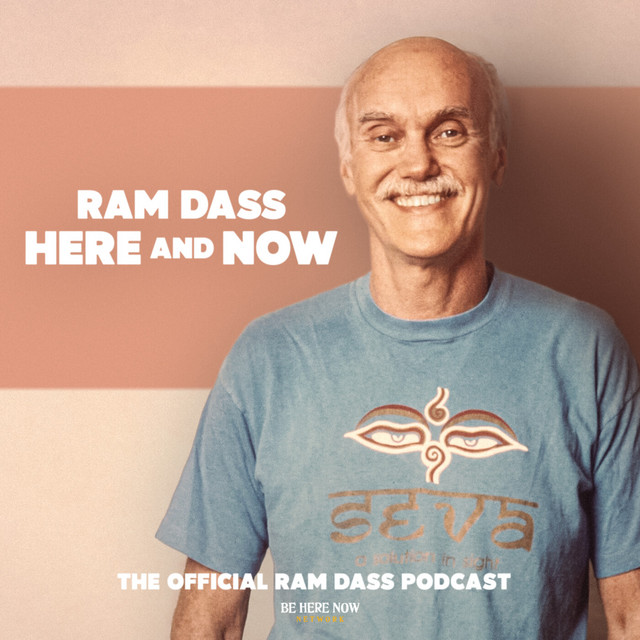
In this brief reflection, Ram Dass uses haiku—the minimalist Japanese poetic form—as a lens to examine the interior landscape of the spiritual traveller. Rather than treating haiku as mere literary exercise, he presents it as a contemplative tool that collapses the distance between observer and observed, revealing the essence of presence that lies at the heart of the spiritual journey. The form's constraint becomes its freedom: by stripping away excess, haiku points directly to what is.
What Is Haiku as Spiritual Practice?
Haiku, rooted in Zen Buddhism, is far more than a three-line poem. It is a distilled moment of awareness—a snapshot of reality captured with such clarity that the boundary between the perceiver and the perceived dissolves. The form's structural simplicity (5-7-5 syllables in English approximation) forces the practitioner to eliminate decoration, sentimentality, and intellectual commentary. What remains is presence itself.
For Ram Dass, haiku operates as a doorway into the here-and-now. Each haiku is an act of radical attention, a way of stopping the mind's constant chatter and settling into direct perception. This is not about creating beautiful poetry; it is about using the form as a meditation device that trains consciousness to notice what is actually present rather than what the mind thinks should be present.
Why Does the Traveller Need Haiku?
The spiritual traveller—the seeker moving along the path of consciousness—often carries a heavy load of expectations, goals, and mental constructs about what enlightenment should look like or what the journey should feel like. Haiku cuts through this. By anchoring awareness in a single, specific moment, the traveller learns to meet reality as it is, not as an idea about reality.
Ram Dass teaches that the spiritual path is not primarily about achieving something distant or becoming someone different. Rather, it is about awakening to what is already here. Haiku is a practice that embodies this teaching. Each poem is a small act of surrender—the surrender of trying to make meaning and instead receiving the meaning that is already present in the moment.
How Does Simplicity Reveal Truth?
In Western spirituality, there is often an assumption that depth requires complexity. More techniques, more knowledge, more experience. But the haiku tradition suggests the opposite: that the deepest truths are accessible only through radical simplification. The removal of everything unnecessary is not a loss; it is a clarification.
When you strip a poem down to seventeen syllables capturing a single moment, you are left with something irreducible. A frog jumps. A leaf falls. Snow settles. These are not profound ideas, yet they point to the profound nature of existence itself—the simple isness of things, untouched by interpretation. This is the spiritual traveller's ultimate discovery: that liberation is not found in accumulating more experience but in seeing clearly what already is.
Where to Go from Here
If this teaching resonates, consider engaging with haiku as a contemplative practice rather than a literary one. Spend time observing a single moment—a bird at a window, a cup of tea, the quality of light at a particular hour—and attempt to capture it in the haiku form. The goal is not to write good poetry but to use the discipline of the form as a way to train your mind to rest in direct perception. Notice how the constraint of brevity clarifies your seeing. Over time, this practice can reshape how you move through the world, teaching you to be a more awake traveller on the path.