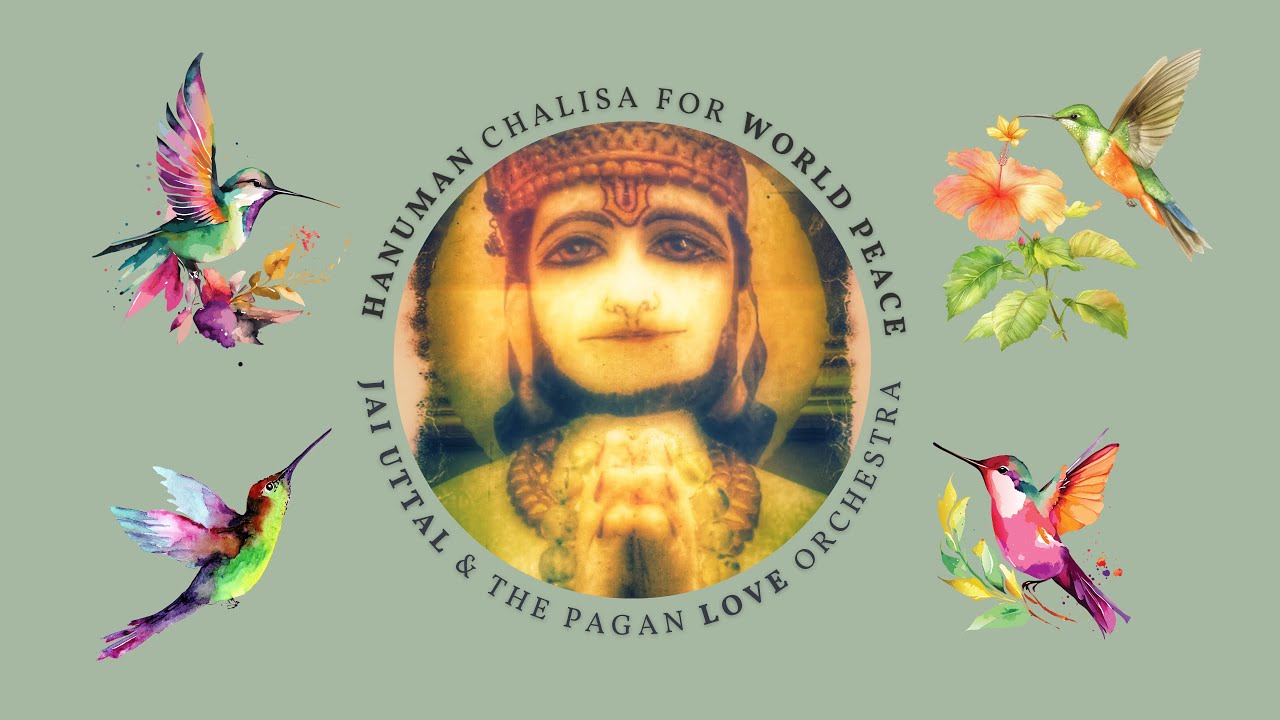
This live performance captures Jai Uttal singing the Hanuman Chalisa, a classical 40-verse Sanskrit hymn of devotion to Hanuman, the monkey deity revered across Hindu tradition. The video documents the chant in its full ceremonial form, with audience participation and traditional musical accompaniment, offering an accessible entry point to one of Hinduism's most widely recited devotional texts. Understanding the Chalisa requires knowing both its theological significance—Hanuman as a symbol of courage, loyalty, and surrender to the divine—and its practical use as a meditation and protection practice across centuries and cultures.
What is the Hanuman Chalisa and why is it chanted?
The Hanuman Chalisa is a 40-verse Sanskrit devotional hymn composed in the 16th century by the poet Tulsidas. The word "Chalisa" comes from the Hindi word "chalis," meaning forty, referring to the exact number of verses in the text. It is structured as a series of prayers and praises addressing Hanuman, the monkey deity known in Hindu mythology as the devoted follower of Rama and an embodiment of unwavering faith, courage, and strength.
Chanting the Chalisa serves multiple spiritual purposes. Devotees recite it as a form of worship, meditation, and protection practice. In Hindu tradition, Hanuman is believed to remove obstacles, grant courage, and protect against negative forces. The recitation is practiced both individually for personal spiritual development and communally in temples, homes, and ashrams. The rhythmic nature of the Sanskrit verses, combined with the melodic quality when sung, makes the practice accessible to practitioners of varying skill levels while maintaining profound spiritual significance.
Who was Hanuman and what does he represent in Hindu theology?
Hanuman is one of the most beloved figures in the Hindu pantheon, appearing prominently in the Ramayana epic. Born as the son of Anjana and Kesari, he is depicted as a monkey with extraordinary strength, intelligence, and unwavering devotion to Rama, the seventh incarnation of Vishnu and central figure of the Ramayana.
In theological terms, Hanuman represents several core spiritual principles. First, he embodies bhakti—pure, selfless devotion. His relationship with Rama is characterized by complete surrender and unconditional service without expectation of reward. Second, he symbolizes courage and strength deployed in service of righteousness. In the epic, Hanuman performs seemingly impossible feats—leaping across oceans, battling demons, and moving mountains—all in service of dharma (righteous duty). Third, Hanuman represents the triumph of mind and spirit over physical limitations. Despite being depicted as an animal, he is portrayed as intellectually superior to many human and divine beings, teaching practitioners that physical form does not limit spiritual achievement.
His celibacy, discipline, and focus on a single purpose—service to Rama—make him an ideal for renunciates and spiritual seekers. In modern Hindu practice, Hanuman is also invoked for protection, strength during difficulty, and removal of obstacles.
What is the structure and content of the 40 verses?
The Hanuman Chalisa follows a classical devotional structure. It opens with invocations and salutations, then proceeds through descriptions of Hanuman's origins, his physical prowess, his deeds in the Ramayana, and his spiritual qualities. The verses describe his physical form, his loyalty to Rama, his courage in battle, his intelligence, and his spiritual attainments.
Key themes woven throughout include:
- Divine lineage: Verses describe Hanuman's parentage and birth as a blessing from celestial beings.
- Physical power: Repeated reference to his strength, speed, and physical capabilities as metaphors for overcoming obstacles.
- Devotional perfection: Extensive praise of his singular focus on Rama, presented as the highest spiritual achievement.
- Loyalty and service: Detailed accounts of Hanuman's deeds in service of Rama, particularly his role in the Rama-Ravana war.
- Protection and grace: Verses assert that recitation of the Chalisa grants protection from harm, fear, and spiritual ignorance.
- Humility despite power: A central paradox—Hanuman is shown as supremely powerful yet entirely humble, serving without ego.
The final verses typically include closing prayers and affirmations of the benefits of recitation, often stating that those who remember Hanuman with devotion are freed from all suffering and obstacles.
How does chanting the Hanuman Chalisa function as a spiritual practice?
The Chalisa operates on multiple levels as a spiritual technology. At the most basic level, the regular recitation of Sanskrit verses serves as a form of mental discipline and focus. The rhythmic structure and melodic patterns, especially when sung as in Jai Uttal's rendition, create a natural meditative state. The repetition of devotional language gradually rewires the mind's habitual patterns, training attention and intention.
On a deeper level, chanting the Chalisa is believed to invoke Hanuman's presence and blessing. In Hindu theology, sound (mantra) carries vibrational power; the correct pronunciation and feeling-tone of Sanskrit syllables is thought to create specific spiritual effects. Practitioners report that consistent chanting reduces anxiety, increases courage, and creates a felt sense of protection.
Psychologically, the practice anchors awareness in qualities that Hanuman represents—courage, loyalty, single-pointed focus, and selfless service. By repeatedly meditating on these qualities through the verses, the practitioner gradually embodies them. The Chalisa also provides a container for devotional feeling; rather than attempting to generate bhakti (devotion) through will alone, the verses provide the form and focus for devotional energy to flow naturally.
In the context of Jai Uttal's live performance, the communal singing amplifies these effects. Chanting together in a group creates a collective field of intention and emotional attunement. The presence of an experienced kirtan artist serves as an anchor, allowing participants to relax into the practice without needing to manage technical details like pronunciation or melody.
What is Jai Uttal's role in the kirtan tradition and how does he approach the Chalisa?
Jai Uttal is one of the most respected contemporary kirtan artists, having dedicated decades to the Hindu devotional music tradition. Kirtan is a participatory form of call-and-response chanting, typically accompanied by instruments like the harmonium, tabla, and cymbals. Rather than a performance where the audience passively listens, kirtan is interactive—the artist leads, and the community joins in singing, creating a shared devotional experience.
Uttal's approach to the Hanuman Chalisa in this December 2016 performance emphasizes accessibility and authentic transmission. By singing the Chalisa in its traditional Sanskrit form with clear melodic structure, Uttal makes the practice available to participants regardless of their prior knowledge of Hindu traditions or Sanskrit. His decades of training in both Hindu bhakti music and contemporary musical contexts allow him to hold the sacred integrity of the practice while making it emotionally resonant for a modern, often Western audience.
The live setting amplifies what is unique about kirtan as spiritual practice: it is not about perfect individual performance, but about the collective raising of devotional consciousness. Uttal's role is to serve as a guide and focal point, allowing the gathered community to access states of joy, connection, and spiritual opening through participatory song.
Where to go from here
If this introduction to the Hanuman Chalisa resonates, consider exploring the practice in several directions. First, listen to the full recording repeatedly to familiarize yourself with the melody and Sanskrit pronunciation. Many contemporary recordings are available, including other kirtan artists' versions; finding a rendering that speaks to your heart matters more than technical perfection.
Second, if you feel drawn, begin a personal practice of reciting or chanting the Chalisa. Tradition suggests chanting 40 days consecutively for maximum benefit, though even occasional practice is valuable. Some practitioners recite it daily as part of their morning or evening meditation. Written translations are readily available; reading the English meaning alongside the Sanskrit deepens understanding and devotional quality.
Third, consider attending live kirtan events in your area or online. The communal dimension of chanting activates aspects of the practice that solo recitation cannot fully access. Many ashrams, yoga studios, and spiritual centers offer regular kirtan gatherings.
Finally, explore the broader context of Hanuman devotion by reading sections of the Ramayana that feature Hanuman prominently, or by studying Hindu theology more broadly. Understanding the character and mythology deepens your relationship to the practice. The Hanuman Chalisa is not merely a prayer to an external deity, but an invocation of qualities and capacities within yourself—courage, loyalty, strength, and selfless service—that the practice gradually awakens and embodies.