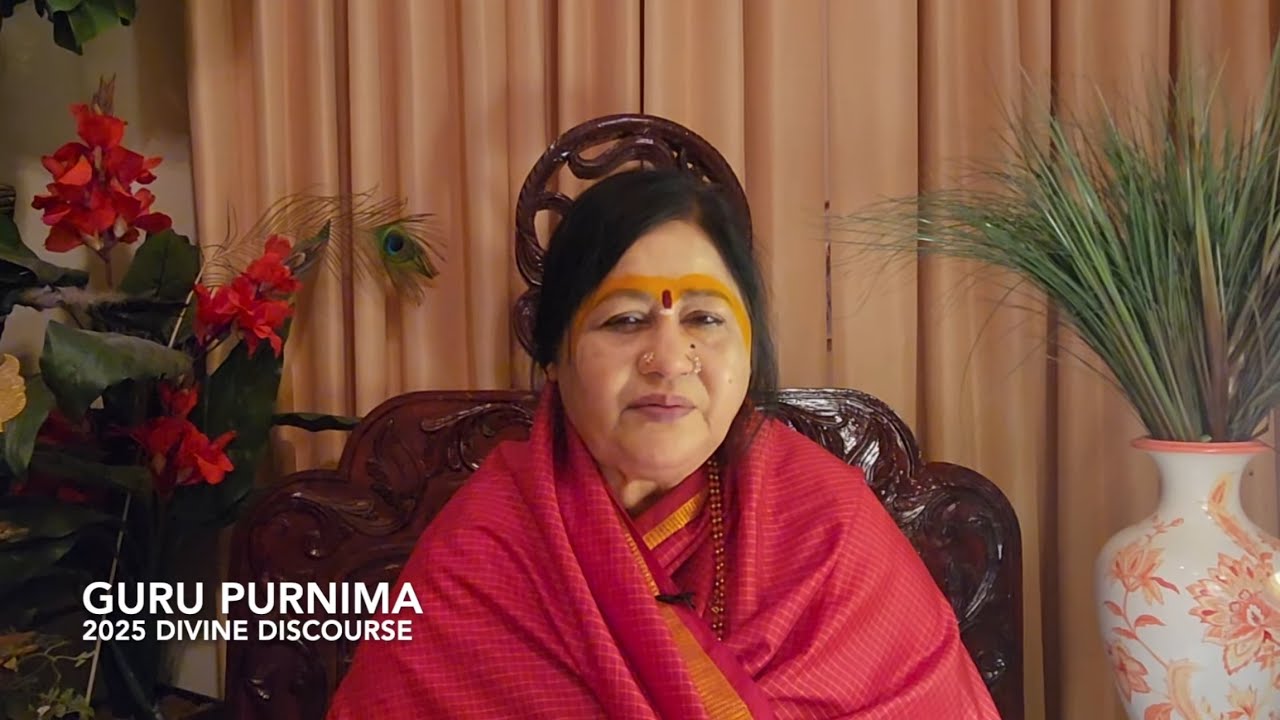
Sri Karunamayi offers a devotional song titled "Ninnepoojinchuchu Ninnedhyaninchuchu," dedicated to Sri Lalithambika Devi, the divine feminine principle in Hindu spirituality. The piece weaves mantra, melody, and heartfelt bhakti (devotion) into a meditation on worship and remembrance of the goddess. Through rhythmic chanting and musical accompaniment, Karunamayi invites listeners into a direct encounter with divine presence—not as abstract theology, but as lived spiritual practice.
What Is the Purpose of This Devotional Chant?
The song "Ninnepoojinchuchu Ninnedhyaninchuchu" centers on two core devotional acts: puja (worship) and dhyana (meditation). The title itself announces this dual practice—invoking the goddess through ritual reverence while simultaneously turning inward in contemplative stillness. Karunamayi's approach demonstrates that these two dimensions need not be separate; worship and meditation can be woven into a single continuous thread of devotion.
For practitioners of bhakti yoga (the path of devotion), such chants serve multiple functions simultaneously. They anchor the mind in divine remembrance, quieting the internal chatter that typically dominates consciousness. They create a vibrational frequency—through sound, rhythm, and the Sanskrit phonemes themselves—believed in tantric and vedic traditions to attune the nervous system and subtle body to higher states of awareness. And they reinforce the lived relationship between the devotee and the divine, not as intellectual understanding but as embodied experience.
Who Is Lalithambika Devi in Hindu and Tantric Spirituality?
Lalithambika, also known as Lalita Tripurasundari, is understood in Hindu and tantric philosophy as the supreme divine feminine principle—the primordial energy (Shakti) that gives rise to all creation. Unlike abstract metaphysical concepts, the goddess in bhakti traditions is approached as a living, responsive presence. She is not merely a symbol but a direct portal to the transcendent.
In tantric systems, Lalita is associated with divine beauty, playfulness (lila), and the transformative power of creation. She embodies the paradox central to advaita vedanta and tantra: simultaneously the creator of all phenomena and the unchanging consciousness aware of creation. Devotional practice toward her aims at direct recognition of this dual nature within oneself—that the meditator is both the eternal witness and the dynamic creative force.
By chanting her name and invoking her presence through song, practitioners are not petitioning an external deity but awakening an inner recognition of their own divine nature. This is the non-dual significance many tantric teachers ascribe to goddess worship: it removes the illusion of separation between worshipper and worshipped.
How Does Mantra and Melody Work Together in Spiritual Practice?
Karunamayi's song demonstrates a principle fundamental to Hindu devotional music: mantra (sacred sound) and raga (melodic form) are not decorative but structurally essential to spiritual transformation. The combination is not arbitrary.
Mantra operates through the precise articulation of Sanskrit phonemes. Each sound is believed to carry vibrational resonance that affects the subtle energy channels (nadis) and chakras of the body. When chanted with awareness and intention, mantra becomes a technology of consciousness—a method as precise as any scientific instrument, though operating in the domain of mind and subtle physiology rather than gross matter.
Melody, provided by the musical accompaniment in this recording, serves several functions. It makes the mantra memorable and emotionally accessible. It engages the heart-centered awareness (bhakti) necessary for devotional practice to penetrate beyond intellectual understanding. And it creates a sonic environment that supports sustained focus—the mind naturally settles into repetition and rhythm rather than fragmenting into distraction.
The combination in traditional devotional singing is pedagogical: the melody carries the mantra, and the mantra anchors the melody in sacred intention. Neither alone achieves what the two together accomplish.
What Role Does Sound and Chanting Play in Hindu Spiritual Traditions?
In Vedic, tantric, and bhakti traditions, sound (nada) holds a foundational place in cosmology and practice. The Upanishads teach that creation itself emerged from the primordial sound OM (or AUM)—the vibration from which all manifest reality arises. To engage with sound consciously through chanting is to participate directly in the creative principle underlying existence.
This is not merely poetic metaphor but a framework within which practitioners report measurable subjective effects: deepened states of meditation, emotional release, physical healing, and shifts in perception. Modern neuroscience research increasingly confirms that rhythmic chanting does affect brain wave states, the vagal nervous system, and emotional regulation—validating through a different language what traditional practitioners have known experientially for millennia.
When Karunamayi chants the names and invocations of the goddess, she is not simply expressing emotion but engaging in what tantric philosophy calls "nama japa"—the repetition of the divine name as a concentrated practice of recognition. The name and the named are not separate; to call upon the name with full presence is to invoke the actual presence it represents.
How Does Devotional Singing Deepen Spiritual Realization?
Bhakti—devotion—is often described in Hindu philosophy as the most accessible path to liberation (moksha) for the modern practitioner. Unlike raja yoga (the path of meditation) or jnana yoga (the path of knowledge), bhakti does not require extensive preliminary practice or renunciation. It works with the heart's natural capacity for love and reverence.
Songs like "Ninnepoojinchuchu Ninnedhyaninchuchu" function as devotional technology because they align all dimensions of the practitioner simultaneously. The intellect engages with the meaning and symbolism of the goddess. The emotions engage through the melody and the heartfelt intention of worship. The body engages through the rhythm and the subtle effects of chanting Sanskrit phonemes. The will engages through the sustained attention required to follow the chant.
When all these dimensions are aligned and directed toward a single focal point—the divine presence of Lalithambika—the usual fragmentary nature of consciousness begins to cohere. The meditator experiences what teachers call "one-pointedness" or "ekagrata"—the state in which scattered mental energy consolidates into unified awareness. This is the foundation of all deeper meditative states and ultimately of spiritual realization.
Additionally, devotional practice engages what tantric philosophy calls "bhava"—the quality of feeling or emotional flavor that colors experience. By regularly invoking feelings of reverence, gratitude, and intimate connection with the divine through song, the practitioner gradually transforms their baseline emotional reality. Over time, this emotional recalibration can lead to what teachers describe as "prema"—spontaneous divine love—where the sense of separation from the sacred dissolves into direct intimate union.
What Is the Significance of Remembrance (Dhyana) in Spiritual Practice?
The second element of the song's title—"ninnedhyaninchuchu," invoking meditation or remembrance—points to a crucial dimension of Hindu and tantric spirituality: that liberation is fundamentally a matter of remembrance (anusmarana) rather than acquisition. The soul already is divine; spiritual practice is the removal of veils obscuring this recognition rather than the attainment of something new.
Dhyana in this context is not blank meditation or concentration on an empty screen. It is active remembrance of the divine presence—holding the image, name, and felt sense of Lalithambika continuously in consciousness. Traditional practitioners describe this as "not forgetting" the divine, even in the midst of daily activity.
This practice gradually shifts the meditator's sense of reality. The presence invoked through chanting becomes not something "out there" requiring external effort to access, but an ever-present dimension of consciousness that had simply been overlooked. Over time, the boundary between formal practice (singing the chant, sitting in meditation) and ordinary life becomes porous. The presence remains accessible continuously.
Where to Go From Here
For those drawn to this chant, the next steps are simple but profound: listen with full attention, allowing the sound and melody to wash through you without trying to "do" anything. If you know basic Sanskrit pronunciation, consider learning to chant the syllables yourself. The difference between listening and chanting is significant—chanting engages the subtle physiology more directly and creates a stronger anchor in consciousness.
You might explore other devotional practices to Lalithambika Devi, such as the Lalita Sahasranama (the thousand names of Lalita) or the Soundarya Lahari (a classical tantric text of praise to the goddess). These deepen familiarity with the symbolic and energetic dimensions of the divine feminine. You might also seek out teachings from contemporary teachers of bhakti yoga or tantra who can contextualize these practices within a living lineage and provide personalized guidance.
Most importantly, recognize that devotional practice is not esoteric or reserved for specialists. It requires only the willingness to direct your heart's love and attention toward what you recognize as sacred. The song "Ninnepoojinchuchu Ninnedhyaninchuchu" is an invitation to remember what has never been absent—the divine presence at the heart of existence, personified as the beloved goddess Lalithambika.